
If you've passed the first stage of the Stipendium Hungaricum Scholarship — the nomination by your home country — congratulations. The next thing you're probably worried about is the university admission test and interview. If you want to see the other funding options available alongside it, browse our directory of scholarships in Hungary for international students.
I remember feeling exactly the same. What questions would they ask? Would it be difficult? Do scholarship applicants get a harder interview than fee-paying students? What if nerves made me mess up?
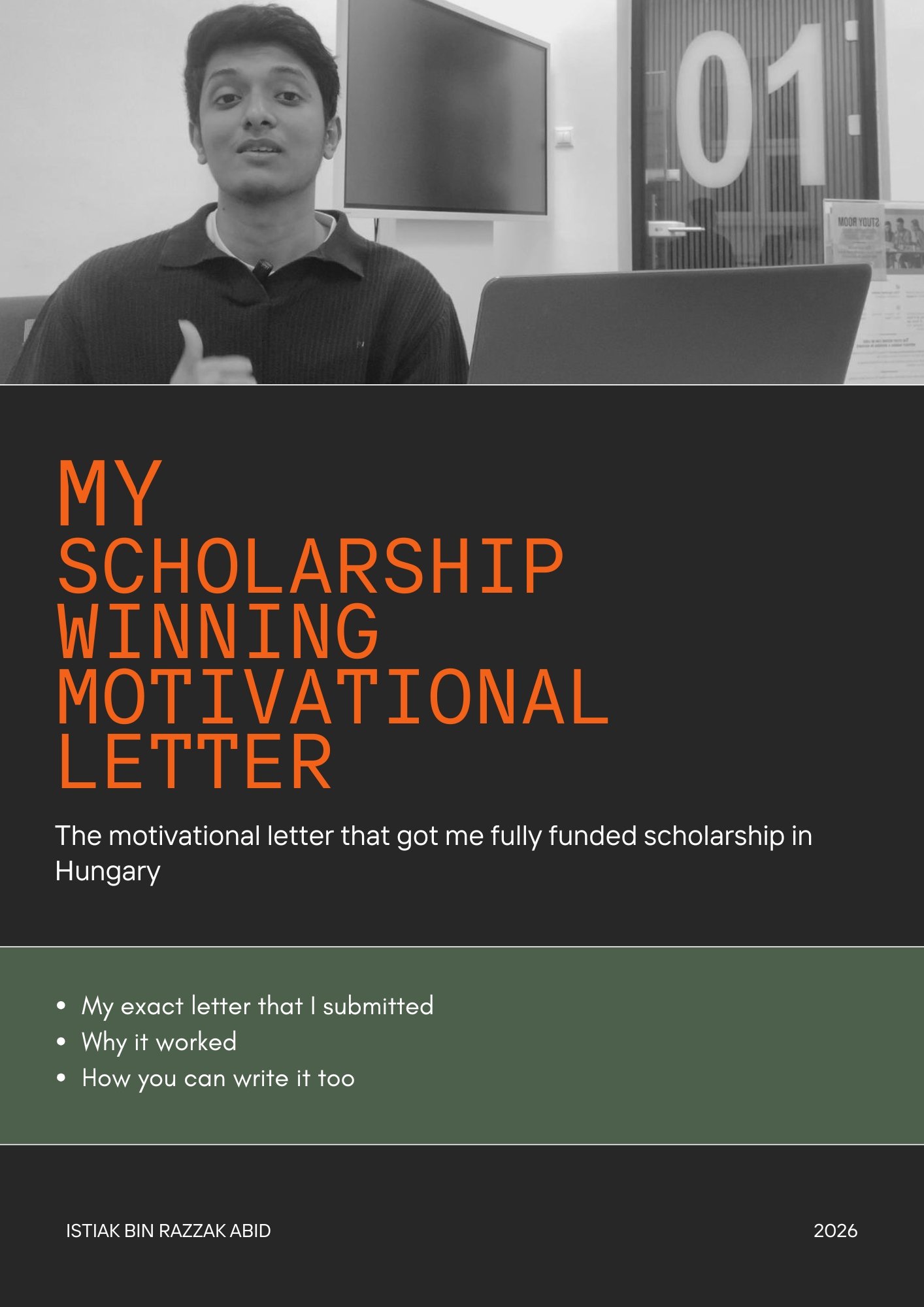
Now that I'm studying Computer Science at the University of Debrecen on the Stipendium Hungaricum Scholarship, I want to share my own interview experience and explain how this stage of the selection process actually works.
Keep in mind every university runs its own admission process, so what follows is specific to the University of Debrecen. Your interview may look different depending on the university and programme you choose.
Quick Answer: Stipendium Hungaricum Interview Questions and Process (2027)
- Process: your country's sending partner nominates you, then the Hungarian university evaluates your documents, sets a test and an interview, and offers you a place. Tempus Public Foundation makes the final scholarship decision.
- Format: universities such as the University of Pécs run the test and the oral interview online, and the interview is carried out by a committee. Every university sets its own format, so check yours.
- Timing: the 2027/28 call is expected to open in November 2026 (the 2026/27 round opened on 17 November 2025 and closed on 15 January 2026). University tests and interviews usually fall between March and May, and final results arrive around June.
- Questions: they depend on your programme. The real University of Debrecen questions are in the sections below.
Useful Resources
- Full Application Guide: How to Apply for Stipendium Hungaricum
- Free SOP Writer: catchthatscholarship.com/tools/sop-outliner/
- Scholarship Database: catchthatscholarship.com/tools/scholarships/
The Stipendium Hungaricum Selection Process, Step by Step
The interview is one step in a longer chain. This is the order in which things usually happen, based on the published procedures of the Tempus Public Foundation and Hungarian host universities:
- Apply online and through your sending partner. You submit your application on the official portal and follow your country's own nomination rules. Only nominated applicants move on. See our full guide on how to apply to the Stipendium Hungaricum scholarship for 2027/28.
- Document evaluation. After nomination, the university evaluates your uploaded documents, and universities such as the University of Pécs use a point system for this.
- Entrance test. Where a test is required, it is held online.
- Oral interview. Eligible applicants are invited to an online interview carried out by a committee.
- Admission decision. If you pass, you receive an “acceptable” offer, or a “conditionally acceptable” offer if some documents are still missing.
- Scholarship decision. Universities only make the admission decision. Tempus Public Foundation makes the final decision about the scholarship, taking into account your preferences, your exam results and each university's capacity.
Because every host institution runs its own evaluation, the exact content and order can differ. Always follow the instructions in the email your university sends you.
Does Every Applicant Have to Attend an Interview?
No. The interview sits inside the second stage of the Stipendium Hungaricum selection process. After your home country's nominating authority approves your application in Stage 1, your chosen Hungarian university reviews it directly.
Some universities only require a written admission test. Others require an interview, and some require both. If your programme needs an interview, the university emails you everything you need: the date, the platform, what to prepare, and any technical instructions. Check your inbox regularly — universities communicate directly with applicants, and missing an email at this stage can cost you the offer.
Is the Interview Hard?
One of the biggest misconceptions is that scholarship applicants get a harder admission test than students who pay tuition fees. That isn't how it works. The university doesn't create a separate exam for scholarship applicants — whether you're applying through Stipendium Hungaricum or as a self-funded international student, you usually sit the same admission test for your programme.
The university's job is simply to work out whether you're academically ready for the programme you've chosen. After evaluating applicants, it sends its recommendation to the Tempus Public Foundation, which makes the final scholarship decision based on available places and the wider selection process.
Knowing that actually made me feel better going in. The interview wasn't designed to eliminate scholarship applicants — it was designed to check whether I was ready to study Computer Science.
Does the Difficulty Depend on the University?
Yes, absolutely. Different universities set different admission standards, and highly competitive programmes tend to have tougher entrance tests than less competitive ones. I applied to the University of Debrecen and found the process fair and manageable with proper preparation — but the most important thing is to prepare for your university, not someone else's.
Many universities publish sample entrance examinations, previous admission papers, reading lists, or recommended textbooks on their admissions pages. Spend time exploring your university's website before your interview — it can tell you exactly what to expect.
Test and Interview Format by Programme Type
There is no single Stipendium Hungaricum interview. What you face depends on your level and subject:
| Programme | Typical format |
|---|---|
| Bachelor's (general) | Document evaluation, an online test where required, and an online oral interview with a committee. Some universities schedule these in April–May. |
| Computer Science (University of Debrecen) | A written mathematics test followed by an online maths-based interview, as described in the sections below. |
| Medicine and Dentistry | Often an online exam testing biology and chemistry, according to scholarship guides, so check your university's entrance exam page. |
| PhD | An online oral interview with a committee. Shortlisted applicants receive a guideline email around 5–7 days before the interview, and the doctoral school decides within about two weeks. |
If you are still choosing programmes, our guide to affordable universities in Hungary and the university finder can help you compare options before you decide where to apply.
My University of Debrecen Admission Test Experience
When I applied, my first programme choice was Computer Science and my second was Business Informatics — both under the same faculty at the University of Debrecen. Because of that, I only needed to sit one written admission test and one interview.
If you apply to two completely different universities, expect separate admission processes for each. The same is true if your two programme choices belong to different faculties, even at the same university.
What Was the Written Test Like?
For my programme, the written test focused on mathematics — roughly high-school level, equivalent to what I'd studied up to Class 12. The university required around 56% to pass, and I made it through. The exact questions change year to year, so don't try to guess them: check your university's admissions page or email the admissions office directly if the syllabus isn't clear.
What Questions Was I Asked During My Interview?
The interview was also mathematics-based. The interviewer first gave me a quadratic equation and asked how I would solve it. I said I'd use middle-term factorization, and he asked me to walk through it step by step while he worked alongside me on an online whiteboard.
Because I was nervous, I made a simple mistake — I treated 4x − 2x as 6x. The interviewer just smiled and asked me to look at the line again. I hadn't understood at first, partly from nerves and partly from adjusting to his accent, but I looked again, caught the error, and corrected it. We carried on.
That moment taught me something worth remembering: making one mistake doesn't mean you've failed the interview. The interviewer wasn't trying to trick me — he wanted to see whether I could notice and fix my own error.
The Circle Equation Question
Next, he wrote another equation and asked what it was. I said "a curve." He smiled and asked, "yes, but what kind of curve?" After a few seconds I realized it was the equation of a circle, and quickly added — trying not to sound too embarrassed — "and this represents the radius." I laugh about it now. I was simply nervous. A few more straightforward maths questions followed, about the same level as the written test, and the whole thing felt much more like a discussion than an interrogation.
I Still Got the Scholarship Even Though I Wasn't Admitted Straight Into the Bachelor's
Something many students don't know: I wasn't admitted directly into the Bachelor's programme. I'd applied using my AS Level results, since I hadn't finished my full A Levels yet. Instead of rejecting my application, the University of Debrecen offered me a place in the Foundation Year, which I accepted.
The Foundation Year was fully covered by the Stipendium Hungaricum Scholarship, and after completing it I progressed straight into my Bachelor's in Computer Science. Since Bachelor's programmes in Hungary generally run three years, compared to four in Bangladesh, it didn't feel like I'd lost any time at all.
Accepting the Foundation Year, when I could have waited and reapplied later, was one of the best decisions I've made.
My Tips for Passing the Interview
Don't panic. Interviewers aren't trying to fail you — they're checking whether you have the academic foundation to succeed in your chosen programme.
Practise with previous admission papers. Many Hungarian universities publish sample entrance exams or recommended study materials. Use them — they're one of the best ways to prepare.
Ask the university what to expect. If the admissions page isn't clear, email the admissions office. There's nothing wrong with asking what subjects to prepare.
Know your own application. Two different universities usually means two separate admission processes. Two programmes under the same faculty at one university may mean a single combined process — check your specific case.
Don't let one mistake wreck your confidence. I made mistakes, misheard questions, and gave at least one wrong answer under nerves — and I still received an offer. The interview is about more than getting every answer perfect.
Questions to Prepare For
Universities rarely publish their interview questions, so nobody can promise you an exact list. These are the topics committees usually want to hear about, which makes them a sensible preparation checklist:
- Subject fundamentals. Revise the core topics of your chosen programme. In my case this was school-level mathematics, so check your university's admissions page for sample papers.
- Why this programme? Explain what attracts you to the subject and how it connects to your previous studies.
- Why Hungary and this university? Show that you have read about the university and the programme.
- Your career goals. Say what you plan to do after graduating and how the degree helps.
- Your application. Be ready to talk about anything in your documents and motivation letter. Our free SOP Outliner helps you structure that letter.
If you want to see how another government scholarship handles interviews, read the interview section of our Türkiye Bursları guide. To plan backup options, compare other Hungarian awards in our Hungary scholarship directory and browse the scholarship database for programmes in other countries.
What Happens After the Interview?
After a successful interview you receive an admission offer from the university, either “acceptable” or “conditionally acceptable” if some documents are missing. The offer is not the scholarship itself: Tempus Public Foundation makes the final decision, and results usually arrive around June. Once you have the scholarship, start planning your move. Our guides to accommodation in Hungary for international students and the living cost in Hungary cover what to expect.
Frequently Asked Questions About the Stipendium Hungaricum Interview
Will there be an interview or a written test?
It completely depends on the university and your chosen programme. Some programmes only conduct an interview, others only a test, and some require both. The university will clarify this when they email you.
Where can I find the test syllabus?
Your best option is to check the specific university's official website, as they usually list admission requirements there. If you can't find it, don't hesitate to email their admissions office directly.
What is the passing mark for the test?
There is no universal passing score; it varies from university to university. At the University of Debrecen, the passing threshold was around 56%, but always verify the criteria for your specific programme.
Are the test and interview conducted online?
Yes. As an international applicant applying from abroad, both the test and the interview are conducted entirely online.
Is the entrance exam hard?
The difficulty level is standard and exactly the same as what regular tuition-fee-paying students take. There are no trick questions specially made for scholarship holders.
What questions are asked in the Stipendium Hungaricum interview?
It depends on your programme and university. Interviews usually check your subject fundamentals, your reasons for choosing the programme and Hungary, and your career goals. At the University of Debrecen, the Computer Science interview was maths-based, with a quadratic equation and the equation of a circle.
Who makes the final decision on the Stipendium Hungaricum scholarship?
Universities only make the admission decision. Tempus Public Foundation makes the final decision about the scholarship, based on your preferences, entrance exam results and the capacity of each host institution.
When are the Stipendium Hungaricum interviews held?
Host universities usually run their tests and interviews between March and May, after the sending partners have made their nominations. Some universities schedule bachelor's exams in April and May, and results follow around June. Dates differ by university, so follow the emails you receive.
What does a conditionally acceptable offer mean?
It means you passed the document evaluation and the interview but some required documents are still missing. You need to upload them to turn the offer into a full acceptance.
Final Advice
If there's one thing I want you to take from this, it's: don't overthink the interview before it even happens. Prepare properly. Work through as many practice questions as you can find. Review your subject fundamentals. Read whatever your university has published about the process.
And most importantly, stop telling yourself you're going to fail before you've even started. I was nervous too. I made mistakes. I wasn't perfect. Yet today I'm studying Computer Science at the University of Debrecen on a fully funded Stipendium Hungaricum Scholarship.
Hopefully, your interview becomes the next success story.
Ready to apply? Start with our guide on how to apply to the Stipendium Hungaricum scholarship, since the 2027/28 call is expected to open in November 2026.
Helpful Resources
- Full Application Guide: How to Apply for Stipendium Hungaricum
- Free SOP Writer: catchthatscholarship.com/tools/sop-outliner/
- Scholarship Database: catchthatscholarship.com/tools/scholarships/
Sources
The step-by-step process and formats above come from the published procedures of the Tempus Public Foundation and Hungarian host universities. The questions, mistakes and results in the Debrecen sections are based on one applicant's own admission experience. Every university runs its own process, so confirm the details with yours.