Why Study in Azerbaijan?
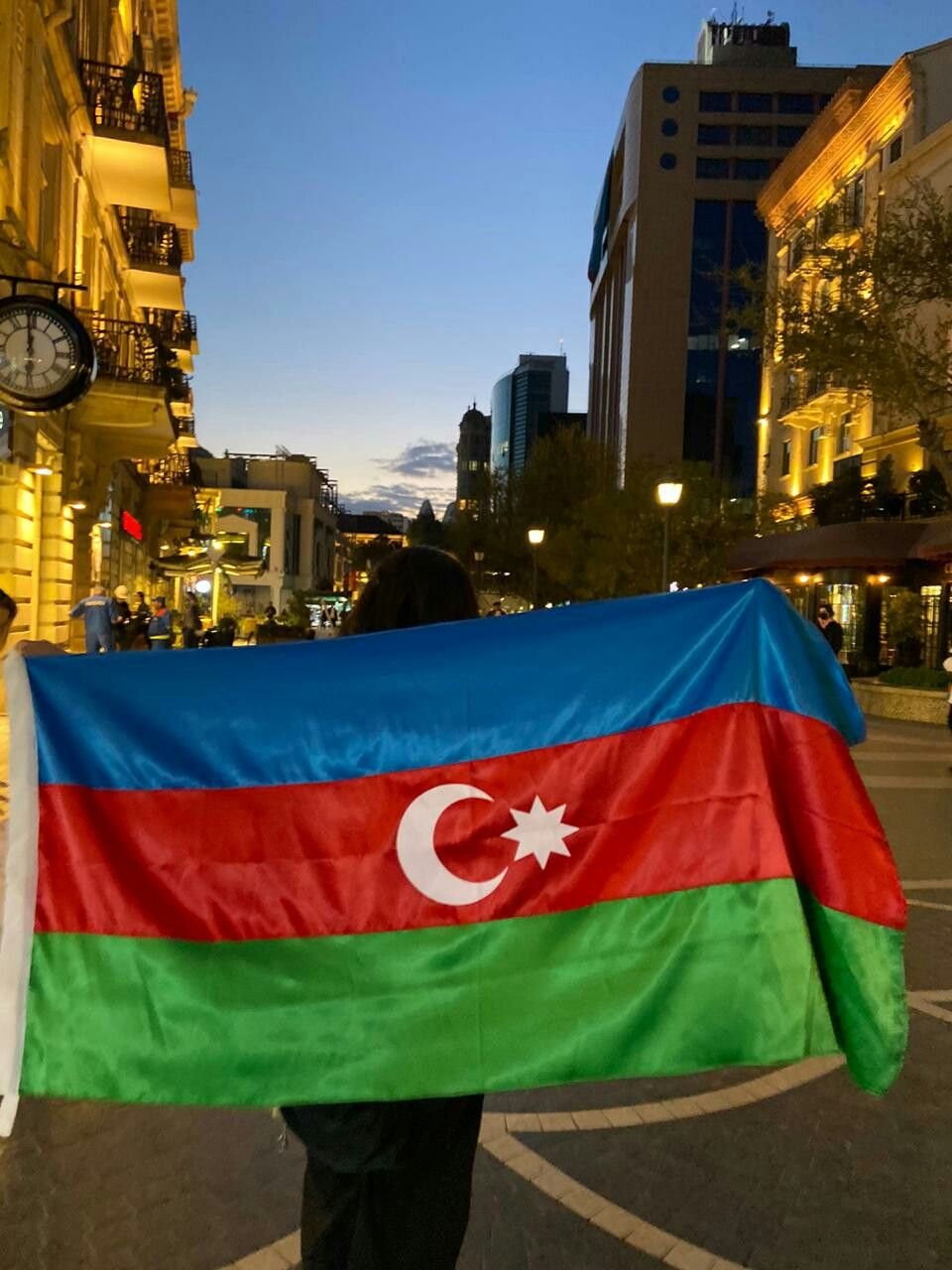
Azerbaijan punches well above its weight as a study destination. The country sits at the crossroads of Eastern Europe and Western Asia, giving students a genuinely unique cultural vantage point — and a capital city, Baku, that blends UNESCO-listed medieval architecture with a futuristic skyline. Beyond the aesthetics, there are four hard academic reasons to choose Azerbaijan.
Affordable Tuition & Living Costs
Tuition at state universities starts from around $1,000–$3,000 per year for most programs. Monthly living expenses in Baku — rent, food, and transport — typically run $400–$700, far below Western European cities like Prague or Warsaw at comparable quality of life.
Strategic Location
Baku is a four-hour flight from most European capitals and well-connected to Central Asia, the Middle East, and the Caucasus. Studying here means networking across three continents — a genuine career advantage in fields like energy, trade, diplomacy, and logistics.
Bologna-Aligned Degrees
Azerbaijan adopted the Bologna Process, meaning bachelor's, master's, and PhD degrees are structured identically to European counterparts. Credits transfer smoothly, and qualifications are recognised across the European Higher Education Area — critical if you plan to continue studying or work abroad.
Safe & Welcoming Environment
Azerbaijan consistently ranks as one of the safer countries in the region for foreigners. Baku has a well-developed hospitality culture; international students report feeling welcomed both on campus and in the wider city. Dedicated international student offices at major universities ease the transition significantly.
Top Universities in Azerbaijan for International Students
Azerbaijan has more than 50 higher education institutions. For international applicants, the following universities stand out for their international student support, English-taught offerings, and academic reputation.
ADA University
Azerbaijan's most internationally oriented university, modelled on the American higher education system. All programs are taught in English, covering public administration, IT, law, and social sciences. ADA has strong ties with the UN, World Bank, and USAID, and is the top choice for students seeking a globally competitive degree in Azerbaijan.
Baku State University (BSU)
The country's oldest and largest university, founded in 1919. BSU offers programs in law, natural sciences, international relations, journalism, and humanities. Several master's programs are available in English, and the university has active exchange agreements with over 100 foreign institutions.
Khazar University
A private liberal arts university with a strong commitment to English-medium education. Khazar is particularly noted for its schools of Engineering & Applied Sciences, Information Technologies, and Humanities. It is one of the more internationally accessible private universities in the country for self-funded students.
Azerbaijan State University of Economics (UNEC)
The leading economics and business university in the country, with a large international student community. UNEC offers English-taught programs in finance, business administration, and international economic relations. Tuition fees are among the most competitive for English-medium study in Azerbaijan.
Azerbaijan State Oil and Industry University (ASOIU)
One of the oldest technical universities in the Caucasus region, ASOIU is the destination of choice for students pursuing petroleum engineering, chemical technology, and applied mathematics. It has deep industry links with BP, SOCAR, and other major energy companies operating in the Caspian region.
Tuition Fees & Cost of Living in Azerbaijan
Affordability is one of the strongest reasons to choose Azerbaijan over more established study destinations. Here is a realistic breakdown of what to expect.
Tuition Fees
| Degree Level | State University (per year) | Private University (per year) |
|---|---|---|
| Bachelor's (BSc / BA) | $1,000 – $3,500 | $3,000 – $8,000 |
| Master's (MSc / MA) | $1,500 – $4,000 | $4,000 – $9,000 |
| PhD / Doctorate | $2,000 – $5,000 | $5,000 – $10,000+ |
| Medicine (MBBS) | $4,000 – $7,000 | $7,000 – $12,000 |
Figures above are indicative ranges in USD. Actual fees depend on the university, faculty, and language of instruction. English-taught programs typically sit at the higher end of each bracket. Always confirm current fees directly with the admissions office before applying.
Monthly Cost of Living in Baku
| Expense | Estimated Monthly Cost (USD) |
|---|---|
| Shared apartment rent | $150 – $300 |
| Private studio / one-bedroom | $300 – $600 |
| University dormitory | $50 – $120 |
| Food (cooking at home) | $80 – $150 |
| Eating out (local restaurants) | $100 – $200 |
| Public transport (metro + bus) | $15 – $30 |
| Utilities (electricity, internet) | $30 – $70 |
| Total (mid-range estimate) | $400 – $700 |
Scholarships to Study in Azerbaijan
International students have two main funded pathways into Azerbaijan's higher education system: a fully funded government grant and a range of university-level awards. Here is what each covers.
🏛️ Heydar Aliyev International Education Grant (Fully Funded)
The flagship international scholarship of the Republic of Azerbaijan, administered by the Ministry of Education. Named after national founder Heydar Aliyev, this grant covers all core study expenses for high-achieving international applicants admitted to Azerbaijani universities.
- Full tuition waiver at the assigned university
- Monthly living stipend for the duration of study
- Free dormitory accommodation on campus
- Health insurance coverage
- Azerbaijani language support on arrival
📋 Azerbaijan State Scholarship
A state-administered scholarship that funds international students enrolled in Azerbaijani state universities. Awards are granted through bilateral agreements and open competitions coordinated by the Ministry of Education of Azerbaijan.
- Tuition coverage at state universities
- Monthly stipend during the academic year
- On-campus accommodation support
🎓 University-Specific Scholarships
Beyond the government programs, several universities offer their own funded or partially funded awards for high-achieving international applicants:
- ADA University Fellowships: ADA awards merit-based fellowships to incoming master's students, covering partial or full tuition. These are competitive and require a strong academic record, leadership portfolio, and a compelling essay. Fellowships are announced annually on the ADA website.
- Khazar University Scholarships: Khazar offers tuition discounts and partial scholarships to international students who demonstrate academic excellence during the application process. Top-performing BSc applicants may receive up to a 50% tuition reduction.
- UNEC Merit Awards: Azerbaijan State University of Economics awards fee waivers to outstanding international students in its English-taught business and economics programs. Eligibility is based on GPA and entrance examination results.
- ASOIU Grants: The State Oil and Industry University provides funded places to international postgraduate students in petroleum engineering and related fields, often in partnership with energy-sector employers.
Admission Requirements & Application Process
Requirements differ by degree level, but most universities follow a common framework. Here is what to prepare.
General Admission Requirements
Academic qualifications
For bachelor's programs: a recognised high school diploma with competitive grades (equivalent to 70–80% or above). For master's programs: a bachelor's degree in a related discipline with a minimum GPA typically around 2.5–3.0 out of 4.0 or equivalent. For PhD: a master's degree plus a research proposal and, in most cases, a confirmed supervisor.
Official transcripts and diploma
Certified copies of all academic transcripts, your diploma or graduation certificate, and — for postgraduate applicants — a document attesting to your previous degree classification. Documents not in Azerbaijani or English must be accompanied by a certified translation.
Proof of language proficiency
For English-taught programs: IELTS (typically 5.5–6.5), TOEFL iBT, Cambridge B2/C1, or a Medium of Instruction (MOI) letter from your previous institution. For Azerbaijani-medium programs: no proficiency test is required at application stage — universities offer a pre-sessional Azerbaijani language course. Russian-medium programs similarly do not require a standardised test.
Valid passport and photographs
A passport valid for at least 18 months beyond your intended start date. Most universities ask for biometric passport photographs in the format specified on their online application portal.
Motivation letter & references
A personal statement (400–800 words) explaining your choice of program and university, your academic background, and your career goals. Most universities also request one or two academic reference letters. For PhD applications, a detailed research proposal (1,500–3,000 words) and evidence of contact with a potential supervisor strengthen the application significantly.
Medical certificate
An up-to-date medical clearance certificate confirming you are free from serious communicable diseases. Some universities specify the format; others accept a general practitioner's letter on headed paper.
How to Apply
There are two main application routes for international students:
- Direct university application: The majority of universities — including ADA, Khazar, BSU, and UNEC — accept applications directly through their own online portals. Timelines vary, but most institutions open applications between February and June for September intake. Some universities also offer a February intake with a September–November application window.
- Centralised portal (portal.edu.az): The Ministry of Education of Azerbaijan operates a centralised higher education portal at portal.edu.az that aggregates programs from state universities. Scholarship applicants and students applying to multiple state institutions can manage their applications in one place through this system.
Student Visa & Residence Permit for Azerbaijan
Getting the legal right to study in Azerbaijan is a two-step process: securing a student visa before you travel, and then converting it to a residence permit once you have arrived and enrolled.
Step 1 — Student Visa
Most nationalities need a student visa before entering Azerbaijan for the purpose of studying. You have two options:
- E-visa (ASAN Visa): Azerbaijan's ASAN Visa system (evisa.gov.az) allows citizens of most countries to apply for a visa online. Once you have received your university admission letter and enrollment confirmation, you can apply for a student e-visa, typically valid for 30 days on entry (sufficient to then apply for a residence permit). Processing takes 3–5 business days; the fee is approximately $20–$25 USD.
- Embassy application: Citizens of countries not covered by the e-visa system, or those who prefer a multi-entry visa, should apply at the nearest Azerbaijani diplomatic mission. Required documents include your passport, acceptance letter from the Azerbaijani university, proof of financial means, medical certificate, and visa application form. Processing usually takes 5–15 business days.
Step 2 — Residence Permit
After arriving in Azerbaijan and enrolling at your university, you must register with the State Migration Service of Azerbaijan within 10 days of entry. Your university's international student office will typically guide you through this process. You will need:
- Valid passport
- Student visa
- Enrollment certificate from your university
- Proof of accommodation (dormitory letter or rental contract)
- Medical certificate and recent passport photographs
- Migration Service application form (available at the office or online)
The residence permit is issued annually and must be renewed at the start of each academic year. Scholarship students often have this process managed partly by the university on their behalf — confirm with your international student coordinator on arrival.
Life in Azerbaijan as an International Student
Beyond the academics, Azerbaijan — and Baku in particular — has a lot to offer students who arrive curious and open-minded.
Safety & Security
Baku is widely regarded as one of the safer cities in the wider region for foreign students. Street crime is low, the city centre is well-lit and well-patrolled, and the government places strong emphasis on security partly because of Azerbaijan's importance as an energy and transit hub. Most international students report feeling safe both on and off campus.
Hospitality & Culture
Azerbaijani culture places enormous value on hospitality — the concept of qonaqpərvərlik (guest-friendliness) is deeply embedded. Students from South Asia, Africa, and Central Asia regularly describe being welcomed warmly both by locals and by fellow international students. The food scene is diverse, affordable, and genuinely excellent.
Multicultural Campus Life
Azerbaijan hosts students from over 80 countries, particularly at ADA University and Baku State University. Student unions, international cultural events, language exchange programs, and orientation weeks run by universities help new arrivals build networks quickly. English is widely spoken on campuses and in central Baku.
Student Support Services
Major universities maintain dedicated International Student Offices that assist with registration, residence permits, dormitory allocation, and local orientation. ADA University in particular is well-regarded for its structured onboarding program and responsive student affairs team. Most universities also provide counselling, health, and career services in English.
FAQs About Studying in Azerbaijan
Is Azerbaijan a good country to study in?
Yes — particularly for students prioritising affordability, safety, and a genuinely international city experience. Baku is a modern, well-connected capital with excellent infrastructure, and the country's Bologna-aligned degree structure means qualifications are recognised across Europe. It is an especially strong choice for students in engineering, petroleum sciences, business, international relations, and IT who want a degree with real regional industry relevance.
Can I study in Azerbaijan in English?
Yes. ADA University operates entirely in English. Khazar University, UNEC, ASOIU, and several faculties at Baku State University also offer English-medium programs. The number of English-taught programs is growing year on year as universities compete for international students. That said, learning basic Azerbaijani or Russian enriches daily life considerably and is appreciated by locals, even if not required for academic study.
Is the Heydar Aliyev Grant fully funded?
Yes, the Heydar Aliyev International Education Grant is a fully funded scholarship that covers tuition, accommodation, a monthly living stipend, and health insurance. It is administered by the Ministry of Education of Azerbaijan and is open to international students applying to Azerbaijani state universities. Read our full application guide for eligibility criteria, required documents, and the step-by-step application process.
Do I need to know Azerbaijani to study there?
Not if you are applying to an English-medium program. For Azerbaijani-medium programs, universities typically include a pre-sessional language preparation course for incoming international students — no proficiency is required at the application stage. The Heydar Aliyev Grant and Azerbaijan State Scholarship also include language support as part of the package. Within six months of daily exposure, most students report functional Azerbaijani for everyday conversation.
How do I apply to universities in Azerbaijan?
There are two main routes. You can apply directly through the university's own admissions portal — most universities have an online system accessible from their official website. Alternatively, the Ministry of Education's centralised portal at portal.edu.az aggregates programs from state universities and is the recommended route for scholarship applicants. For the Heydar Aliyev Grant and Azerbaijan State Scholarship, applications go through the Ministry's official channels. See our full scholarship guides for detailed, step-by-step instructions.
Is Azerbaijan safe for international students?
Generally yes. Baku has a low rate of street crime compared to many European capitals. The government invests heavily in security infrastructure, and international students are a valued and visible community in the city. As with any destination, normal city-living precautions apply — be aware of your surroundings, avoid displaying expensive items, and use licensed taxis or ride-hailing apps (Bolt and Uber both operate in Baku) at night. The vast majority of international students complete their degrees without any serious safety incident.
What is the cost of living in Baku for students?
A realistic monthly budget for a student living comfortably in Baku — covering shared accommodation, food, transport, and leisure — sits between $400 and $700 USD. Students living in university dormitories typically spend at the lower end of this range. The Azerbaijani manat is stable and the cost of locally produced food, public transport, and everyday services is notably lower than in Western or Central Europe. Scholarship recipients may find their stipend largely covers these costs, leaving tuition as the primary funded expense.
Ready to apply for an Azerbaijan scholarship?
Read our step-by-step guides for the Heydar Aliyev Grant and Azerbaijan State Scholarship — covering every stage from documents to the final decision.