Free Subscribe & get 70+ international scholarships checklist
🇳🇱 Netherlands 💰 Fully Funded MSc Only ⚙️ TU Delft International Students

TU Delft Excellence Scholarships
Complete Step-by-Step Guide

The Justus & Louise van Effen Excellence Scholarship is one of the most generous awards offered by a Dutch university: full tuition coverage plus a living-expense contribution for outstanding international students admitted to a two-year Master's programme at Delft University of Technology — Europe's leading engineering and technology university. Here's everything you need to know to apply successfully, in one place.

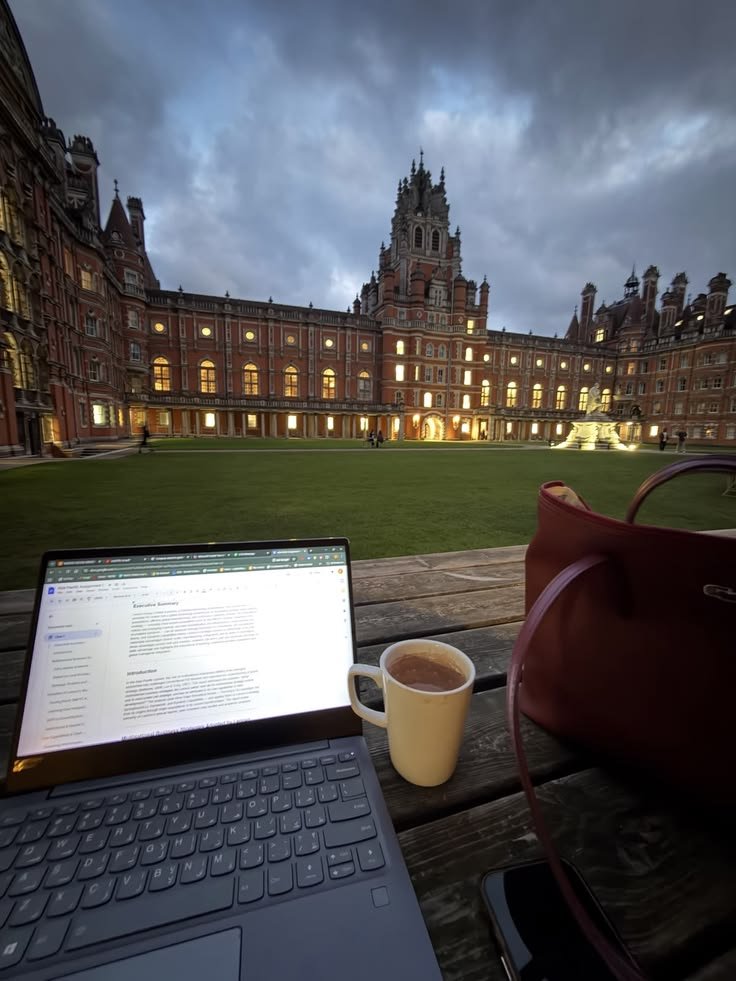
TU Delft campus Delft Netherlands — Justus and Louise van Effen Excellence Scholarships for international students
💰
Full Tuition
+ Living Allowance (2 Years)
🎓
MSc Only
Regular 2-Year Programmes
📅
~1 Dec
Typical Annual Deadline
🌍
Worldwide
All International Applicants

Scholarship Overview — What Is the TU Delft Excellence Scholarship?

The Justus & Louise van Effen Excellence Scholarship is Delft University of Technology's flagship merit-based award for outstanding international Master's students. It is financed by the legacy of Justus van Effen, a TU Delft alumnus from the 1940s who believed strongly that technological progress could help solve the world's most pressing societal problems. After his passing, the Foundation Justus & Louise van Effen was established with the explicit aim of encouraging excellent international students to pursue their MSc studies at TU Delft, by removing the financial barriers that often stand in their way.

Unlike broader, more accessible national programmes, the van Effen scholarship is deliberately selective and generous: rather than a partial grant, it provides full tuition fee coverage for the entire duration of your two-year Master's programme, along with a monthly contribution toward living costs. TU Delft is consistently ranked among the world's top universities for engineering, technology, and applied sciences — and the scholarship is the university's primary mechanism for attracting the strongest international talent regardless of financial background.

The scholarship cycle runs annually, with applications typically opening in the autumn and closing on the same date as the general MSc admissions deadline for most non-EU/EEA applicants — usually around the start of December for programmes beginning the following September. Because the scholarship application is submitted together with your MSc application (there is no separate scholarship-only portal), your entire application package — academic records, references, English test scores, and motivation answers — needs to be ready well before that single combined deadline.

Each TU Delft faculty typically awards a small, fixed number of van Effen scholarships per year — historically around two per faculty — which makes this one of the most competitive scholarships available to international Master's applicants in the Netherlands. That said, the criteria are clear and merit-based: strong prior academic performance, a coherent fit between your background and your intended MSc, and a well-articulated motivation are what selection committees are looking for.

Critically: the scholarship is only available for regular, single-diploma 2-year MSc programmes at TU Delft. Joint Education Programmes and Erasmus Mundus-style joint degrees are explicitly excluded, as are 1-year MSc tracks, part-time programmes, exchange programmes, and PhD positions (which in the Netherlands are typically salaried research roles rather than scholarship-funded study).

Detail Information
Official Name Justus & Louise van Effen Excellence Scholarship
Host Institution Delft University of Technology (TU Delft), Netherlands
Funded By The Foundation Justus & Louise van Effen (private legacy fund)
Eligible Applicants International students worldwide (no nationality restriction beyond standard non-Dutch admission criteria)
Degree Level Regular full-time 2-year Master's (MSc) programmes only
Eligible Programmes All TU Delft faculties offering a regular 2-year MSc — varies by intake year, check the official eligible-programmes list
Application Route Submitted together with your MSc application — no separate scholarship-only portal
Applications Open Typically alongside the general MSc application cycle, several months before the deadline
Typical Annual Deadline Around 1 December (23:59 CET) for intakes beginning the following September — always verify the current year's exact date
Results Notification Typically by the end of March, ahead of the September intake
Number of Awards Approximately two scholarships per faculty per year (varies)
Scholarship Amount Full tuition fees (statutory or institutional rate depending on nationality) + a monthly living-expense contribution
Duration of Award Full two-year MSc programme, conditional on continued academic progress
Combinability One excellence scholarship per academic cycle — cannot be combined with other TU Delft or Dutch government scholarships for the same period
Joint/Erasmus Mundus Degrees Not eligible — only regular single-diploma TU Delft MSc programmes qualify

What Does the TU Delft Excellence Scholarship Cover — And What Doesn't It Cover?

Being clear about exactly what the van Effen scholarship pays for helps you plan your move to the Netherlands with confidence. Here is a complete breakdown of every benefit, alongside what you'll still need to budget for yourself:

💰

Full Tuition Coverage

Both MSc Years

The scholarship pays your full tuition fee for the entire two-year programme, calculated at the statutory rate (for EU/EEA-equivalent nationals) or the institutional rate (for non-EU/EEA nationals), whichever applies to your registered nationality. This is the single biggest cost of studying at a Dutch technical university, and it is fully removed.

🏠

Living-Expense Contribution

Monthly Allowance

Alongside tuition, recipients receive a monthly contribution toward accommodation, food, and daily living costs in Delft. The exact amount is reviewed periodically by the Foundation and confirmed in your award letter — always check the current figure on the official page for your intake year.

🤝

Scholarship Club Membership

Career & Network Access

Recipients join the TU Delft Scholarship Club, which provides access to personal development workshops, seminars, and networking events with other scholarship holders and TU Delft's research community — a valuable, often-overlooked benefit beyond the financial award.

🔬

World-Class Research Environment

Top European Technical University

The scholarship places you inside one of the world's leading engineering and technology faculties, with access to advanced labs, interdisciplinary research groups, and a globally diverse student body spanning more than 100 nationalities.

⚠️ Important: What the scholarship does NOT cover

The van Effen scholarship does not cover travel costs to and from the Netherlands, health insurance premiums, visa or residence permit fees, or one-off setup costs (such as a deposit for housing). The Dutch immigration authority (IND) also has its own separate financial-sufficiency requirement for your residence permit application — your scholarship award letter helps satisfy this, but you should confirm the exact figures with TU Delft's International Office before applying for your permit.

Smart strategy: because you can only hold one excellence scholarship at a time, focus your energy on building the strongest possible single application rather than spreading effort across multiple parallel scholarship schemes at the same institution.

Typical Annual Cost vs van Effen Scholarship Coverage (MSc at TU Delft)

Cost Category Typical Annual Range Covered by van Effen Scholarship?
Tuition Fees (institutional rate) €20,000–€32,000+ ✅ Yes — fully covered for both years
Accommodation in Delft €600–€1,000/month ✅ Contributed toward (monthly allowance)
Food & Daily Living €300–€500/month ✅ Contributed toward (monthly allowance)
Health Insurance €100–€150/month ❌ No
Visa / Residence Permit Fees €200–€400 (one-time) ❌ No
Travel to the Netherlands €300–€1,500 (one-time) ❌ No
Scholarship Club Access ✅ Included (workshops, seminars, networking)

Who Can Apply — TU Delft Excellence Scholarship Eligibility Requirements

1. International Applicant Status

The van Effen scholarship is open to international students from anywhere in the world. There is no specific list of priority countries — applicants from India, China, Indonesia, Nigeria, Brazil, Vietnam, Egypt, Mexico, and every other country are welcome to apply, provided they meet the academic and admission criteria below. Dutch nationals, and students who would qualify for statutory (EU-equivalent) tuition rates by virtue of holding an EU/EEA passport, are generally not the intended audience of this scholarship, since it specifically targets the additional cost burden faced by non-EU/EEA students.

2. Admission to a Regular 2-Year TU Delft MSc Programme

  • Eligible: Full-time, on-campus, regular (single-diploma) 2-year Master's programmes offered directly by TU Delft.
  • Not eligible: Joint Education Programmes, Erasmus Mundus joint degrees, 1-year MSc tracks, part-time programmes, online or distance-learning programmes, and exchange or short-course enrolments.
  • Not eligible: PhD or doctoral positions. In the Netherlands, PhD candidates are typically employed as salaried researchers (AIO contracts) rather than scholarship recipients — this makes the Netherlands a strong destination for funded doctoral study through a different route entirely.
  • You must be at least conditionally admitted to your chosen MSc programme at the time of the scholarship decision — full unconditional admission is not required upfront, but you do need to have submitted a complete admissions application.

3. Academic Excellence (Bachelor's Degree)

You need a Bachelor's degree from a recognised, internationally renowned university outside the Netherlands. Selection committees look for excellent academic results in your previous study programme that are clearly relevant to the MSc you're applying for — as a rough benchmark frequently cited by TU Delft and reported by past applicants, being among the top 10% of your graduating cohort is a strong positioning, though there is no single rigid GPA cutoff published for every faculty. Some faculties and aggregator sources reference a guideline GPA around 80% (or equivalent) on your Bachelor's transcript as a useful benchmark — treat this as an indicator of competitiveness rather than an official minimum, and confirm details for your specific faculty.

4. English Language Proficiency

Non-native English speakers need to demonstrate proficiency through a recognised test. Commonly cited benchmarks include an IELTS Academic score of at least 6.5 overall (with no individual band below 6.0) or a TOEFL iBT score of at least 90 overall (with no individual section below 21). Exact thresholds can vary slightly by MSc programme, so always check your specific programme's language requirements on the official TU Delft admissions page, since the scholarship eligibility is built on top of standard programme admission requirements.

5. Complete, On-Time Application

All scholarship documents — the scholarship application form, two reference letters, and your motivation answers — must be submitted together with your MSc application before the combined deadline. Late or incomplete scholarship submissions are not considered, even if your MSc application itself is otherwise complete and on time.

Who Is NOT Eligible for the TU Delft Excellence Scholarship?

  • Applicants to Joint Education Programmes, Erasmus Mundus joint degrees, or any 1-year MSc track
  • Applicants to part-time, online, distance-learning, exchange, or short-course programmes
  • PhD or doctoral candidates (these are salaried research positions in the Dutch system, not scholarships)
  • Students who have already accepted another TU Delft excellence scholarship for the same study period
  • Students who do not submit the complete scholarship package (form + two reference letters + motivation answers) by the combined deadline
  • Students applying to non-regular or discontinued TU Delft MSc programmes not on the current eligible-programmes list

Eligible Faculties and Fields — Where Can You Apply?

The van Effen scholarship is available across TU Delft's faculties, each running its own regular 2-year MSc programmes. The exact list of eligible programmes is reviewed and published annually by TU Delft, since not every MSc track within a faculty is necessarily included every year — but historically, the scholarship has spanned the breadth of the university's core strengths:

🏗️

Civil Engineering & Geosciences Faculty

Structural engineering, hydraulic engineering, transport, geo-engineering, and environmental engineering — TU Delft is globally renowned for water management and infrastructure design.

✈️

Aerospace Engineering Faculty

Home to one of Europe's leading aerospace faculties, covering aerodynamics, spacecraft engineering, control & simulation, and flight performance.

🏛️

Architecture & the Built Environment Faculty

Architecture, urbanism, building technology, landscape architecture, and management in the built environment — a globally respected design faculty.

Electrical Engineering, Mathematics & Computer Science (EEMCS) Faculty

Computer science, electrical engineering, applied mathematics, embedded systems, and AI-related MSc tracks — one of the largest and most in-demand faculties.

⚙️

Mechanical Engineering Faculty

Mechanical, maritime, and materials engineering, biomechanical design, and sustainable energy technology — covering both classic and emerging engineering disciplines.

🧪

Chemical Engineering Faculty

Applied sciences, chemical engineering, nanobiology, and life science & technology programmes — strong overlap with sustainability and process engineering research.

💻

Technology, Policy & Management (TPM) Faculty

Engineering and policy analysis, management of technology, and complex systems engineering — bridging technical depth with societal and policy impact.

🌐

Industrial Design Engineering Faculty

Design for interaction, integrated product design, and strategic product design — blending engineering with human-centred design thinking.

📋 Important: Verify your specific MSc track's eligibility

Not every MSc track within a faculty is automatically included in the van Effen scheme every year, and the list of eligible programmes is republished annually. The complete and current list of eligible programmes is maintained on TU Delft's official scholarship page under "View Eligible Programmes." Always cross-check your exact track before submitting your application, since applying to a non-eligible track means your scholarship application will not be considered even if your MSc application is accepted.

Check Your Eligibility & Track Your TU Delft Scholarship Documents

Use the interactive tools below to instantly check whether you're likely to qualify for the TU Delft Excellence Scholarship, build your document checklist, compare statistics, and explore alternatives — all without leaving this page.
Your Eligibility Check

Question 1 of 4

What type of TU Delft programme are you applying to?

Progress

0 / 0 Ready

💰
Full Funding
Tuition + Living Allowance
🎓
2-Year MSc
Eligible Programme Type
🏛️
~8 Faculties
Across TU Delft
📅
~1 Dec
Typical Deadline
🌍
100+
Nationalities at TU Delft
🏆
~2 / Faculty
Awards Per Faculty

Key insight: Because only around two scholarships are awarded per faculty, the van Effen scholarship rewards depth over breadth in your application. A motivation essay that clearly connects your specific academic background to a specific TU Delft research group or specialisation consistently outperforms generic statements about wanting "a world-class education."

Past Recipient Regions (Illustrative)

South Asia

High

Latin America

High

Southeast Asia

High

Sub-Saharan Africa

Medium

Middle East

Medium

*Illustrative regional indicator based on publicly shared TU Delft recipient profiles and alumni stories. The scholarship is open to applicants from every country.

The van Effen scholarship is highly competitive and limited to around two awards per faculty. If you'd like to broaden your options in the Netherlands or compare against other strong opportunities, consider these guides:

🇳🇱

Holland Scholarship (NL Scholarship)

Netherlands · BSc/MSc

The Dutch government's national scholarship for non-EEA students. Broader eligibility and a simpler application than the van Effen award, though the funding amount is much smaller.

€5,000 One-Time Grant

🇳🇱

Leiden University Excellence Scholarship (LExS)

Netherlands · MSc

Merit-based scholarship from one of Europe's oldest universities. Three award levels for the top international MSc applicants, with a stronger focus on humanities, law, and social sciences.

€10,000–Full Tuition

🇳🇱

University of Amsterdam Merit Scholarship

Netherlands · MSc

UvA's flagship merit award for top international Master's students. Highly competitive but provides significant tuition coverage across a broad range of disciplines.

Full Tuition Waiver

🇳🇱

Maastricht University High Potential Scholarship

Netherlands · MSc

One of the most generous Dutch scholarships — covers tuition, living costs, and accommodation for exceptional international Master's students at UM.

Fully Funded

🇳🇱

Utrecht University Excellence Scholarship

Netherlands · MSc

Competitive excellence award from the Netherlands' highest-ranked university. Covers full tuition and provides a living allowance.

Full Tuition + Living Allowance

🇮🇹

MAECI Italian Government Scholarship

Italy · BSc/MSc/PhD

Italy's government scholarship for non-EU international students. Covers tuition, accommodation, and a monthly allowance. Broad field eligibility.

Fully Funded

View all 100+ fully funded scholarships →

How to Apply for the TU Delft Excellence Scholarship — Step-by-Step Guide

The van Effen scholarship has no separate application portal — it is submitted entirely alongside your standard TU Delft MSc application, through the university's online application system (commonly referred to by past applicants as Osiris/Osiaan). This means your scholarship strategy is, in practice, identical to your admissions strategy: everything must be ready and uploaded together, well before the single combined deadline. Here is the complete process:

  1. Research your target MSc programme and confirm it is scholarship-eligible (several months before the deadline)
    Start by identifying which regular 2-year MSc programme at TU Delft fits your academic background and career goals. Visit the official van Effen scholarship page and click through to "View Eligible Programmes" to confirm your specific track is included for the current intake year — this list is republished annually and not every track is guaranteed to appear every year.
  2. Check the admission requirements for your specific MSc programme
    Each MSc programme at TU Delft has its own entry requirements beyond the general scholarship criteria — specific prior coursework, a minimum GPA benchmark, and the exact English test score thresholds can vary by programme. Read the programme-specific admission page carefully before you start preparing documents.
  3. Begin your online MSc application through TU Delft's application portal
    Create your application account and start your Master's application. This is the single application that carries both your admission decision and your scholarship consideration — there is no way to apply for the scholarship independently of the MSc application.
  4. Download and complete the scholarship application form
    Alongside your standard admission documents, download the official scholarship application form from the TU Delft scholarship page. This form typically asks for short, focused answers — commonly: why you are choosing TU Delft and applying for the scholarship (around 200 words), how you would contribute to your chosen MSc programme (around 200 words), and what your career plans are after graduation. Treat these as your motivation essay — see the dedicated section below for a full breakdown.
  5. Secure two reference letters (in one combined PDF)
    You need two reference letters — typically from a previous professor or academic supervisor, though one may come from an employer if you have relevant work experience. Letters should be in English, French, German, or Dutch, written on official letterhead with an official stamp, signed by the referee with their full name. If a referee can't provide a physical letter in time, they can email a scanned PDF directly to TU Delft, referencing your full name and student number — combine both letters into a single PDF before uploading.
  6. Upload your English proficiency certificate (if required for your nationality/programme)
    If you are a non-native English speaker, prepare your IELTS or TOEFL iBT score report (or whichever equivalent your specific programme accepts) and upload it alongside your other documents. Some applicants may be exempt based on their prior education being conducted entirely in English — check the exemption criteria on your programme's admission page.
  7. Submit all documents together before the combined deadline
    TU Delft typically sets the scholarship deadline around 1 December (23:59 CET) for the following September intake — the same date as the general MSc deadline for most non-EU/EEA applicants. Submitting your MSc application without the scholarship form and reference letters means you will not be considered for the scholarship, even if your admission application is otherwise accepted. Always confirm the precise current-year deadline on the official TU Delft scholarship page, since dates can shift slightly year to year.
  8. Wait for the conditional admission decision and scholarship result (typically by late March)
    TU Delft's faculty-level scholarship committees review all eligible applicants in parallel with standard admissions decisions. Selection criteria include academic excellence in your prior degree, the strength and specificity of your motivation answers, and the quality of your reference letters. Successful applicants are notified directly by TU Delft via email — make sure your contact details on the application are kept up to date and checked regularly.
  9. Accept your conditional admission and scholarship award
    The scholarship award is conditional on you meeting all standard admission requirements (such as final degree confirmation if you were a final-year student at the time of application). Respond to your offer within the requested window to confirm your place.
  10. Apply for your Dutch student visa or residence permit (MVV + VVR)
    Non-EU/EEA students who are admitted and awarded the scholarship need a Machtiging tot Voorlopig Verblijf (MVV) entry visa and a Verblijfsvergunning Regulier (VVR) residence permit from the IND. TU Delft's International Office typically sponsors your IND application as your recognised sponsor. Begin this process as soon as you receive your admission and scholarship confirmation, since IND processing can take several weeks.

How to Write a Winning TU Delft Scholarship Motivation Essay

The scholarship application form's short-answer questions are the part of your application most within your direct control. Unlike a single flowing personal statement, TU Delft's form is typically structured around three focused prompts, each with a tight word limit. Treat each one as a separate, carefully crafted mini-essay rather than fragments of one long narrative:

✅ Recommended structure for the three scholarship form questions

Q1
(~200 words)

"Why do you choose TU Delft, and why are you applying for a scholarship?" Be specific about TU Delft, not generic about "studying abroad." Reference a particular research group, lab, faculty strength, or teaching approach that genuinely drew you to this programme over alternatives. Then explain honestly why scholarship funding changes the equation for you — without dwelling on hardship for its own sake; focus on what the funding unlocks academically.

Q2
(~200 words)

"How would you contribute to TU Delft in your chosen MSc programme?" This is where most generic essays fall flat. Go beyond "I will work hard" — describe a specific skill, project experience, or perspective from your background that adds something to your cohort or research group. If you have relevant project work, prior research, or a notable extracurricular initiative, this is the place to connect it explicitly to your intended contribution.

Q3
(career plans)

"What are your career plans after graduation?" Be concrete rather than aspirational. Selection committees respond well to a clear, plausible trajectory — a specific industry, research direction, or societal challenge you intend to work on — that logically follows from the MSc you're applying for. Avoid vague statements like "I want to make an impact"; instead, name the impact and how this specific degree gets you there.

Tips for Winning the TU Delft Excellence Scholarship

🎯 The most common reasons strong applicants still miss the scholarship

Based on patterns reported across past application cycles, the most common failure points are: (1) submitting the MSc application without the scholarship form and reference letters attached, treating them as optional add-ons rather than a hard requirement, (2) applying to a programme that isn't on the current year's eligible-programmes list, (3) generic motivation answers that could apply to any technical university rather than TU Delft specifically, and (4) reference letters that arrive late or aren't combined correctly into a single PDF as instructed.

  • Start your reference letters early — referees are often slow. Because you need two letters combined into a single PDF, and professors are frequently juggling multiple recommendation requests near the December deadline, ask your referees at least 6–8 weeks in advance. Give them a clear deadline of your own, a few weeks before the actual TU Delft cutoff, to leave room for delays.
  • Confirm your specific MSc track is on the current eligible-programmes list before you invest time. The list changes year to year. A 10-minute check on the official TU Delft scholarship page can save you from preparing a full application for a track that isn't included this cycle.
  • Write each motivation answer as if it could only apply to TU Delft. The strongest applications name specific faculty members, research groups, ongoing projects, or unique facilities. If your "why TU Delft" answer could be copy-pasted into an application for a different university with only the name changed, it needs more specificity.
  • Quantify your academic standing wherever possible. Instead of "I performed very well," say "I graduated 4th out of 162 students" or "I achieved a final GPA equivalent to 3.7/4.0, ranking in the top 8% of my cohort." Concrete numbers give the selection committee an immediate, comparable signal of excellence.
  • Align your prior coursework explicitly with your intended MSc specialisation. Selection criteria specifically call out that your previous academic results should be "relevant to the Master's programme for which you are applying" — so make that relevance unmistakable in your application rather than assuming it's obvious from your transcript alone.
  • Apply for only one TU Delft excellence scholarship per cycle. TU Delft explicitly limits applicants to one excellence scholarship per academic cycle, so there's no advantage in trying to apply to multiple TU Delft scholarship schemes simultaneously — focus your effort on making this single application as strong as possible.
  • Treat the scholarship form as equally important as your MSc application essays. Because the scholarship form is submitted alongside (not instead of) your standard admissions materials, don't let it become an afterthought completed in the final days before the deadline.
  • Build in buffer time for technical issues near the deadline. Application portals can experience high traffic in the days immediately before a major deadline. Aim to submit at least 48–72 hours early rather than at the very last moment.
  • Don't overlook smaller or less "famous" faculties. Faculties with traditionally lower application volume per scholarship slot (compared to extremely popular tracks within EEMCS or Mechanical Engineering, for example) can offer a comparatively better odds-to-fit ratio for a genuinely strong applicant — research the full breadth of eligible programmes rather than defaulting to only the most well-known ones.

After Receiving the Scholarship — What Happens Next?

Receiving your van Effen scholarship award letter is your gateway to studying at TU Delft — here is what to do next:

  • Confirm your acceptance of both admission and scholarship: Respond within the requested window. The scholarship is conditional on you meeting all standard admission requirements, so make sure any outstanding conditions (such as final transcript submission) are completed promptly.
  • Apply for your Dutch visa and residence permit (MVV + VVR): TU Delft's International Office will guide you through the IND application process as your recognised sponsor. Begin this as soon as possible after confirming your place, since processing can take several weeks.
  • Arrange accommodation early: Student housing in Delft is competitive, particularly close to campus. Apply through TU Delft's housing office or recommended housing partners as soon as you receive your admission and scholarship confirmation. Private market alternatives include Kamernet and HousingAnywhere.
  • Register with the Municipality (BRP) upon arrival: Within 5 days of arriving, register with the local municipality to receive your BSN (BurgerServiceNummer), which is required for opening a bank account, arranging health insurance, and most formal transactions in the Netherlands.
  • Get Dutch or international health insurance: Depending on your status (especially if you take on any paid work or student assistantship), Dutch law may require a Dutch health insurance policy (zorgverzekering). Check current requirements with TU Delft's international student office.
  • Open a Dutch bank account: Open an account with a major Dutch bank or a fintech alternative as soon as possible after obtaining your BSN, so your monthly living-expense contribution can be paid in without delay.
  • Join the TU Delft Scholarship Club: Take advantage of the personal development workshops, seminars, and networking events included in your scholarship — this is a genuinely valuable, often underused part of the award.
  • Plan ahead for any costs outside the scholarship's scope: Remember that travel, insurance, and visa fees are not covered by the scholarship itself, even though tuition and a living contribution are. Budget for these separately before you depart.

Frequently Asked Questions About the TU Delft Excellence Scholarship

What exactly does 'fully funded' mean for this scholarship?
It means the scholarship covers full tuition fees for both years of your MSc programme (at the statutory or institutional rate, depending on your nationality) plus a monthly contribution toward living expenses. It does not mean every conceivable cost is covered — travel, health insurance, and visa fees remain your responsibility.
Can I apply for the van Effen scholarship without being admitted to TU Delft first?
You must at least submit a complete MSc application and be conditionally admitted to a regular 2-year programme — the scholarship form and reference letters are uploaded together with this same application. There is no way to apply for the scholarship as a standalone process before or separately from your MSc application.
What is the deadline for the TU Delft Excellence Scholarship?
TU Delft has historically set the deadline around 1 December (23:59 CET) for intakes beginning the following September, aligning with the general MSc deadline for most non-EU/EEA applicants. Exact dates can shift slightly year to year, so always confirm the current cycle's precise deadline on the official TU Delft scholarship page before you begin preparing your application.
Can I apply for the van Effen scholarship at more than one TU Delft faculty?
TU Delft limits applicants to one excellence scholarship application per academic cycle, so you should focus your scholarship application on a single MSc programme and faculty rather than attempting parallel scholarship applications across multiple faculties.
Can the van Effen scholarship be combined with another scholarship?
Generally, no — TU Delft's excellence scholarships are intended as standalone, fully funded awards, and recipients are limited to one excellence scholarship per academic cycle. You may still seek separate funding for costs the scholarship doesn't cover, such as travel or insurance, but combining it with another major Dutch government or institutional scholarship for the same tuition and living costs is not how the programme is designed to work.
What happens if I don't maintain academic progress after receiving the scholarship?
The scholarship is conditional on continued academic progress throughout your two-year programme. Specific continuation requirements (such as minimum credits per year) are set by TU Delft and your faculty — read your scholarship agreement and your programme's academic progress requirements carefully after acceptance.
Do I need IELTS or TOEFL for this scholarship?
Language requirements are set primarily by your specific MSc programme rather than by the scholarship itself, though commonly cited benchmarks for non-native English speakers are an IELTS Academic score of around 6.5+ overall or a TOEFL iBT score of around 90+. Some applicants may be exempt if their entire prior education was conducted in English — check your specific programme's exemption criteria.
Is the TU Delft Excellence Scholarship available for Bachelor's or PhD applicants?
No. The Justus & Louise van Effen Excellence Scholarship is exclusively for regular 2-year Master's (MSc) programmes. PhD candidates in the Netherlands are typically employed as salaried researchers (AIO positions) rather than scholarship recipients, and undergraduate (Bachelor's) applicants are not covered by this particular scholarship — though other scholarship schemes may apply at that level.
I'm from India / Africa / Latin America / Southeast Asia — can I apply?
Yes. The van Effen scholarship has no nationality restriction beyond standard non-Dutch international admission criteria — students from every country are welcome to apply, provided they meet the academic, programme-eligibility, and English-proficiency requirements described above.
How many scholarships does TU Delft award through this programme each year?
Historically, TU Delft has awarded approximately two van Effen scholarships per faculty per year, though exact numbers can vary by faculty and intake cycle. Because the number of awards is small relative to the volume of international MSc applicants, the scholarship is highly competitive.
Can I work part-time in the Netherlands while holding this scholarship?
Yes. International students in the Netherlands on a student residence permit are generally permitted to work part-time during the academic year (and full-time during official holiday periods), which can be a useful way to cover costs outside the scholarship's scope, such as travel or discretionary spending.
Is a separate scholarship application required, or is it automatic from my MSc application?
A separate scholarship application form is required — it is not automatically triggered just by applying for the MSc programme. You must actively download, complete, and upload the scholarship form along with two reference letters as part of your overall application package before the deadline.

Ready to Apply for the TU Delft Excellence Scholarship?

Visit the official TU Delft scholarship website for the current list of eligible programmes and the exact deadline for your intake year.

Visit TU Delft Scholarships ↗
Istiak Bin Razzak Abid — Scholarship researcher and founder of CatchThatScholarship
Written & Verified By

Istiak Bin Razzak Abid

Founder, CatchThatScholarship · Stipendium Hungaricum Awardee · University of Debrecen

Istiak won the Stipendium Hungaricum scholarship while still completing his A-Levels, having also received acceptances from programmes in Romania and Finland. He built CatchThatScholarship to share everything he learned about the scholarship application process — for free. Every guide on this site is based on real experience and verified primary sources, not recycled internet advice.

Read Istiak's full story →

Never Miss a Scholarship Deadline.

Join 4,000+ international students. Get weekly scholarship deadlines and our free checklist of 70+ fully funded scholarships instantly.