Free Subscribe & get 70+ international scholarships checklist
🇳🇱 Netherlands 💰 Tuition + Living Allowance BSc & MSc 🏛️ Utrecht University Non-EU/EEA Only

Utrecht University Excellence Scholarship
Complete Step-by-Step Guide

The Utrecht University Excellence Scholarship (UES) is one of the most prestigious awards available to non-EU/EEA students at one of Europe's leading research universities. With two funding tiers — full tuition only, or full tuition plus a living allowance — it rewards the top 10% of graduating students applying for selected Master's (and a handful of Bachelor's) programmes. Only around 20–25 awards are made across all Graduate Schools each year, making early preparation essential. Here is everything you need to know to apply successfully.

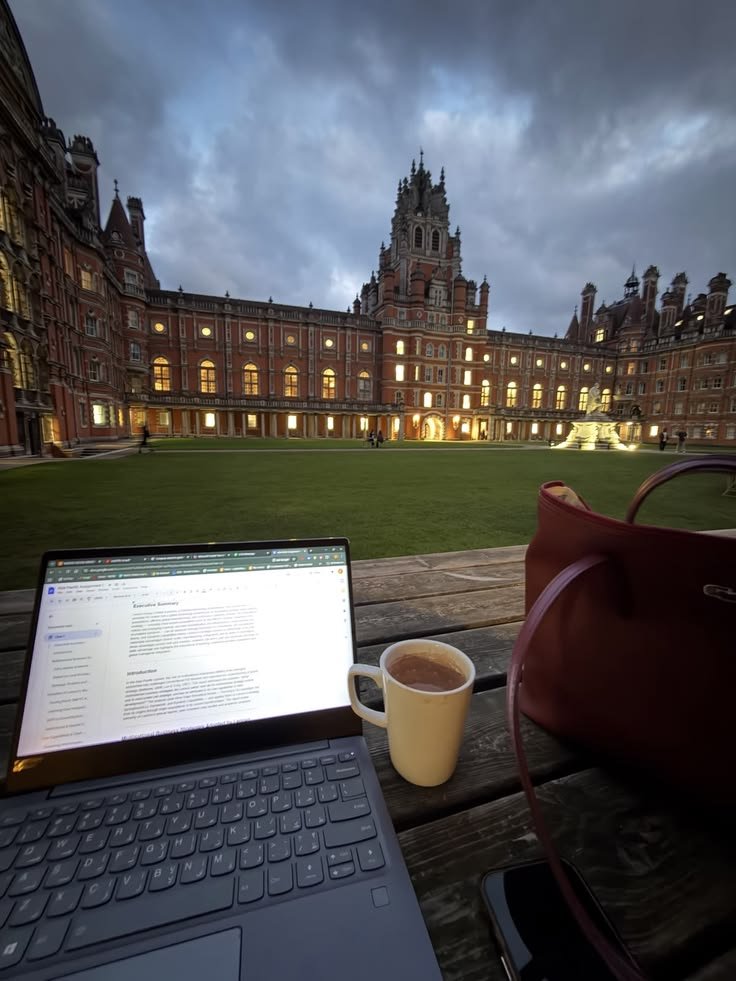
Utrecht University campus Utrecht Netherlands — Excellence Scholarship UES for international students
💰
Two Tiers
Tuition Only OR Tuition + ~€11K
🎓
BSc & MSc
Primarily Master's, Select Bachelor's
📅
1 February
Typical Scholarship Deadline (23:59 CET)
🌍
Non-EU/EEA
All Non-EU/EEA Nationalities

Scholarship Overview — What Is the Utrecht University Excellence Scholarship?

The Utrecht University Excellence Scholarship (UES) is a highly selective merit-based award for outstanding international students from outside the EU/EEA who wish to pursue a Master's (or, in a few cases, a Bachelor's) degree at Utrecht University. Funded by the Utrecht Excellence Scholarship Fund — established by Utrecht University and supported by contributions from its alumni — the scholarship is designed to attract the world's brightest academic talent to one of Europe's most distinguished research universities.

Utrecht University (UU) was founded in 1636, making it one of the oldest universities in the Netherlands and one of the oldest in continental Europe. Its alumni and academic staff include numerous Nobel laureates and winners of major international science prizes. Today, UU consistently ranks among the top 100 universities globally and the top five in the Netherlands, with particular strength in the life sciences, social sciences, geosciences, law, and humanities. Every year, approximately 1,500 international students join its English-taught Master's programmes, creating a genuinely diverse and internationally-oriented academic environment in the heart of the city of Utrecht.

What makes the UES distinct among Dutch university scholarships is its two-tier award structure. Unlike a fixed-value grant, the scholarship can be awarded either as a tuition-only award or as tuition plus a living-cost allowance tied to the Dutch Immigration and Naturalisation Service (IND) minimum income requirement for a student residence permit. This means two students on the same scholarship scheme in a given year may receive meaningfully different total amounts depending on which tier they are offered — something worth understanding clearly before you apply.

The UES is also notable for its OSIRIS-based application process: rather than submitting to a separate scholarship portal, your scholarship application is embedded within the same OSIRIS system you use for your Master's admission, linking the two processes tightly. Your scholarship application is automatically deleted if your Master's application is not submitted first — making the order of operations one of the most practically important things to get right.

Detail Information
Official Name Utrecht Excellence Scholarship (UES)
Host Institution Utrecht University (UU)
Host Country Netherlands
Funding Source Utrecht Excellence Scholarship Fund, established by Utrecht University and supported by alumni contributions
Eligible Nationalities All non-EU/EEA nationalities; students must not hold an EU/EEA passport and must not be eligible for Dutch study grants or loans
Primary Degree Level Full-time international Master's programmes (MSc / MA / LLM); a small number of Bachelor's programmes also participate
Eligible Graduate Schools Graduate School of Geosciences, Graduate School of Humanities, Graduate School of Law, Economics and Governance, Graduate School of Life Sciences, Graduate School of Natural Sciences, Graduate School of Social and Behavioural Sciences — not all programmes within each school participate
Award Structure Two tiers: Tier 1 — full tuition fee only; Tier 2 — full tuition fee plus the IND minimum income for a student residence permit (commonly cited at approximately €11,000 per year for living costs)
Application System OSIRIS Online Application (Utrecht University's integrated admission and scholarship portal)
Programme Application Deadline Varies by programme — typically December or January; always check your specific programme's 'When to Apply' page
Scholarship Application Opens 1 November (after submitting your Master's application)
Scholarship Deadline Typically 1 February at 23:59 CET — always verify on UU's official scholarship page
Results Notification Aim for mid-April — cannot be notified before conditional or unconditional admission to the programme
Duration of Award Nominal duration of the programme — one year for a one-year Master's, or two years for a two-year Master's (subject to satisfactory progress in year two)
Number of Awards Approximately 20–25 scholarships per academic year across all participating Graduate Schools combined
Academic Threshold Top 10% of graduating class — proven via official documentary evidence (not GPA alone)
Prior Dutch Education Secondary school and/or bachelor's degree must have been completed outside the Netherlands

What Does the Utrecht Excellence Scholarship Cover?

The UES is not a fixed lump-sum grant — it is structured around your actual tuition fee at Utrecht University, with the option of an additional living-cost component. Understanding exactly what is and is not covered helps you plan your finances realistically before applying:

🎓

Tuition Fees

100% Covered (Both Tiers)

Both award tiers cover your full non-EU/EEA tuition fee for Utrecht University for the duration of your programme — one year for a one-year Master's, or two years for a two-year Master's (renewable in year two subject to progress).

💶

Living Allowance

~€11,000/Year (Tier 2 Only)

The higher award tier adds a living-cost allowance equivalent to the IND minimum income requirement for a Dutch student residence permit. This covers a substantial portion of rent, food, and daily living but is not necessarily a full cost-of-living guarantee — some students may need supplementary income.

📄

Scholarship Renewal

Year Two (Two-Year Masters)

For two-year Master's programmes, the scholarship can be renewed for the second year provided you demonstrate satisfactory academic progress as determined by Utrecht University during year one — renewal is not automatic.

🏛️

Alumni-Backed Fund

Institutional Prestige

Funded by the Utrecht Excellence Scholarship Fund and alumni contributions — meaning being a UES recipient comes with institutional recognition and the backing of Utrecht's global alumni network.

⚠️ What the UES does NOT cover

Flights, books, personal equipment, and any course-specific materials are not included. The scholarship does not cover visa application fees or health insurance — you will need to arrange and budget for these separately. Utrecht University advises all scholarship recipients to research the full cost of living in Utrecht beyond the IND minimum income figure, which is a floor rather than a recommended living budget.

The Tier 1 (tuition-only) award leaves living costs entirely unfunded, so if you receive a Tier 1 offer, you will need to demonstrate to the IND that you have sufficient additional financial means to cover living costs as a separate requirement for your residence permit.

Understanding the Two Funding Tiers — Which One Will You Get?

One of the most frequently misunderstood aspects of the UES is that it is not a single fixed scholarship — the selection committee awards it at one of two levels, and the difference is significant. Here is how to think about each tier:

Award Tier What It Covers Who Gets This? Key Consideration
Tier 1 — Tuition Only Full non-EU/EEA tuition fee waived for the programme duration Strong applicants who meet the top-10% threshold — determined by the selection committee per programme Living costs must be funded separately; you must still prove IND-sufficient financial means for your residence permit application
Tier 2 — Tuition + Living Full tuition fee waived plus the IND minimum income for study (~€11,000/year for living costs) Top-ranked applicants within the pool — typically the most competitive profiles in a given Graduate School's selection round The living allowance is calculated at the IND minimum — a useful baseline but may not cover all living costs in Utrecht without careful budgeting

You cannot explicitly request a specific tier — the selection committee determines which tier you receive based on the strength of your application relative to others in your Graduate School's pool. The practical implication is that if you are awarded the UES but at Tier 1, you should have a plan for covering your living costs, whether through personal savings, part-time work, or supplementary funding sources.

Who Can Apply — Utrecht Excellence Scholarship Eligibility Requirements

1. Nationality and Student Finance Status

The UES is designed for students who hold a non-EU/EEA passport and who are not eligible for support under the Dutch study grant and loan system (DUO). In practice this means: if you hold an EU member state passport, an EEA country passport (Norway, Iceland, Liechtenstein), or if you qualify for Dutch student finance despite holding a non-EU passport (for example, through specific work or family status in the Netherlands), you are outside the target group.

Unlike some other Dutch scholarships, the UES does not explicitly reference Swiss or Surinamese passports separately — the criterion is EU/EEA passport specifically, combined with DUO ineligibility. If you are unsure whether you qualify as a DUO-eligible student, it is worth contacting UU's International Office for clarification before investing in your application.

2. Academic Excellence — Top 10% of Graduating Class

This is the UES's defining academic requirement, and it is stricter and more nuanced than a simple GPA threshold. Utrecht University does not set a universal minimum GPA figure — instead, it requires that you belong to the top 10% of your graduating class and that you prove this with an official document from your institution. A high GPA transcript alone, without accompanying rank information, is generally not sufficient.

The institution considers a range of evidence: your class ranking certificate, a grade distribution summary showing your position within the cohort, a signed and stamped statement from your registrar, or a reference letter from a professor that explicitly confirms your standing. See the dedicated section below for full guidance on what evidence works and what doesn't.

3. Prior Education Outside the Netherlands

You must have completed your secondary school education and/or your bachelor's degree outside the Netherlands. Note that this criterion uses "and/or" — meaning that if one of those qualifications was completed in the Netherlands but the other was not, you may still technically meet this requirement. However, UU's intent is clearly to target students who are new to the Dutch education system, so if you have a substantial prior Dutch education history, it is worth seeking clarification.

4. Programme Participation and Start Date

  • Not all programmes participate. The UES is only available for specific international Master's programmes explicitly listed as UES-eligible. You must check the "Tuition Fees and Financial Support" section of your specific target programme's page on uu.nl to confirm UES eligibility.
  • September start only. Students starting their programme in February (where applicable) are explicitly not eligible for the UES. The scholarship is tied to the September intake each academic year.
  • Full-time only. Part-time, distance learning, or online variants of programmes do not qualify, even if the on-campus version of the same programme does.

5. Dutch Visa and Residence Permit Compliance

You must be able to meet the conditions required to obtain a Dutch entry visa and residence permit for study. Utrecht University acts as a recognised sponsor (Sponsor) for the IND visa process for accepted international students, which simplifies the process significantly — but you remain responsible for meeting the underlying legal requirements.

6. One Scholarship Application Only

You may submit only one UES application even if you have applied to multiple UES-eligible Master's programmes at Utrecht University. Carefully decide which programme to link your scholarship application to before submitting, as you cannot transfer or duplicate it.

Who Is NOT Eligible for the Utrecht Excellence Scholarship?

  • EU/EEA passport holders (regardless of where they grew up or completed their education)
  • Students eligible for Dutch DUO study grants or loans, even if they hold a non-EU passport
  • Applicants who have completed both secondary school and bachelor's degree inside the Netherlands
  • Applicants to non-participating Master's programmes, online/distance programmes, part-time programmes, or PhD programmes
  • Students who cannot provide official documentary proof of belonging to the top 10% of their graduating class
  • Students starting their programme in February rather than September
  • Students who submit their UES scholarship application before their Master's programme application (UES application will be automatically deleted)

The Top 10% Requirement — What Evidence Does Utrecht University Accept?

This is the question international applicants ask most frequently, and it deserves a clear, detailed answer because it is also the most common point of confusion. The UES does not have a single accepted document type — instead, Utrecht University specifies a general requirement (proof of top-10% standing from your institution) and accepts several forms of evidence that satisfy it:

✅ Documents that Utrecht University accepts as top-10% proof

Class Ranking Certificate

An official certificate issued by your university's registrar or faculty office that explicitly states your rank within your graduating class. Should include the total class size, your rank number or percentile, the academic year or cohort it refers to, and the institution's official stamp and an authorised signature. This is the clearest and most preferred form of evidence.

GPA + Grade Distribution

Your transcript accompanied by a grade distribution summary for your cohort — showing the full distribution of grades across your graduating class so that your GPA can be placed into its correct percentile context. This is especially useful for institutions where a standalone ranking certificate is not standard practice.

Registrar Statement

A signed and officially stamped letter or statement from your university's academic registrar, department head, or dean that explicitly confirms you are among the top 10% of your graduating class. The letter must be on institutional letterhead, signed by a named and titled official, and bear the institution's official seal or stamp.

Reference Letter (Limited)

A reference letter from a professor or academic supervisor that explicitly states, based on their direct knowledge of the cohort, that you belong to the top 10% of your class. This is listed as an option but is generally considered weaker evidence than an official registrar statement, since a professor's assessment of cohort ranking is harder for a selection committee to verify independently.

❌ What is generally NOT sufficient as top-10% proof

A standalone GPA or grade transcript without any rank or cohort context, informal letters from teachers without official stamps, self-reported ranking statements, or a high GPA from a grading scale where the context of the cohort performance is unknown to the committee. If your institution does not routinely issue ranking certificates, contact your registrar proactively and explain that you need an official top-10% confirmation letter for a foreign university scholarship application — most registrars will be familiar with this request.

Eligible Programmes — Which Utrecht University Degrees Can I Apply To?

The UES covers selected international Master's programmes across Utrecht University's six main Graduate Schools, plus a small number of Bachelor's programmes. Because not every programme within each school participates — and the participating list can shift between intake years — always verify on your specific programme's official page before applying. The Graduate Schools historically covered by the UES include:

🌍

Graduate School of Geosciences MSc

Covers Master's programmes including Sustainable Development (with tracks in Energy and Materials, Global Change, and Sustainable Business), Earth Sciences, Human Geography and Planning, and Environmental Sciences — UU's Geosciences faculty is internationally ranked for climate and Earth system research.

📖

Graduate School of Humanities MA

Encompasses a wide range of arts and humanities Master's programmes such as History, Media and Performance Studies, Linguistics, Musicology, Philosophy, and Cultural History. Historically one of the broader Graduate Schools in terms of UES participation.

⚖️

Graduate School of Law, Economics and Governance MSc/LLM

Includes programmes in European Law, International and European Public Law, Criminology, Public Administration and Organisational Science, and Economic Policy. Strong for students interested in law, governance, and policy research.

🔬

Graduate School of Life Sciences MSc

Covers the biomedical and biological sciences — including Molecular and Cellular Life Sciences, Infection and Immunity, Drug Innovation, and Epidemiology. UU's life sciences research is among the strongest in Europe.

⚛️

Graduate School of Natural Sciences MSc

Spans mathematics, physics, computer science, chemistry, and interdisciplinary programmes. Includes Artificial Intelligence, Mathematical Sciences, Nanomaterials Science, Chemistry, and Physics.

🧠

Graduate School of Social and Behavioural Sciences MSc

Covers Social Sciences programmes including Sociology, Social Psychology, Multidisciplinary Economics, Human Geography, and Methodology and Statistics for the Behavioural, Biomedical and Social Sciences.

🎓

Selected Bachelor's Programmes BSc/BA

A small number of Bachelor's programmes also participate in the UES — Economics and Business Economics, Liberal Arts and Sciences at University College Utrecht, Philosophy Politics and Economics, and Global Sustainability Science. Approximately nine Bachelor's-level UES scholarships are awarded per year.

📋 How to confirm if your programme participates

Go to uu.nl/en/masters, find your specific programme page, and navigate to the "Tuition Fees and Financial Support" section. If the Utrecht Excellence Scholarship is listed there as a scholarship opportunity, your programme participates for the current intake. If it is not mentioned, your programme does not participate — regardless of which Graduate School it belongs to. This check takes two minutes and can save you significant wasted effort.

Check Your Eligibility & Track Your UES Documents

Use the interactive tools below to instantly check whether you appear eligible for the Utrecht University Excellence Scholarship, build your document checklist, explore key statistics, and compare alternative scholarships — all without leaving this page.

Your Eligibility Check

Question 1 of 5

What is your citizenship?

Progress

0 / 0 Ready

🎓
MSc + BSc
Both Degree Levels (Primarily MSc)
🏛️
~20–25
Scholarships Awarded / Year
📅
1 Feb
Typical Scholarship Deadline
🌍
All non-EU/EEA
Eligible Nationalities
📈
Top 10%
Minimum Class Ranking Required
💰
2 Tiers
Tuition Only OR Tuition + ~€11K

Key insight: The UES is evaluated per Graduate School — meaning your competition is primarily other applicants to programmes within your same Graduate School, not the entire UU applicant pool. A slightly lower GPA in a less competitive school may outperform a marginally higher GPA in a school with heavier application volume.

Top Source Countries by Application Volume

India

Very High

China

Very High

Indonesia

High

Nigeria

High

Pakistan

Medium

*Relative indicator based on general international applicant patterns at Dutch research universities. The scholarship is open to all eligible non-EU/EEA nationalities globally.

How to Apply for the Utrecht University Excellence Scholarship — Step-by-Step Guide

The UES application is tightly integrated with the Utrecht University admissions process through the OSIRIS system. The most critical thing to understand upfront: your scholarship application will be automatically deleted if you have not first submitted your Master's programme application. The steps below must be followed in order:

  1. Confirm your programme is UES-eligible — before anything else
    Go to your target programme's page on uu.nl, navigate to the "Tuition Fees and Financial Support" section, and check whether the Utrecht Excellence Scholarship is listed. If it is not mentioned, your programme does not participate and applying for the UES will not be possible for that programme.
  2. Check your programme's specific application deadline
    Not all Utrecht Master's programmes have the same application deadline. Navigate to the "When to Apply" section of your target programme's page. In some cases, the programme deadline is as early as December — earlier than the general UES scholarship deadline of 1 February. Submitting a late programme application will make you ineligible for the scholarship even if your scholarship application is submitted on time.
  3. Create your OSIRIS Online Application account
    If you do not already have an account, register at the OSIRIS Online Application portal using your email address. OSIRIS is Utrecht University's integrated system for both admissions and scholarships — you manage everything in one place.
  4. Submit your Master's programme application via OSIRIS
    Complete and submit your application for your chosen UES-eligible Master's programme, ensuring all required documents (transcripts, language certificates, motivation letter, CV, references) are uploaded before the programme's own deadline. The act of submitting this application is what unlocks the scholarship application in your dashboard.
  5. Open your UES scholarship application from 1 November
    From 1 November onward, log back into your OSIRIS account dashboard. You will see a UES application listed as a related process linked to your Master's programme application. Click "view/edit" to open the scholarship form. Note: if you have applied to multiple programmes, you will see multiple UES applications — but you may only submit one.
  6. Upload your proof of top-10% class standing
    This is the only document specifically requested by the UES application form. Upload the strongest available evidence of your top-10% standing — a class ranking certificate, an official registrar statement, or a GPA transcript with grade distribution. See the Proving Top 10% section above for full guidance on what is and is not accepted.
  7. Answer the scholarship questions
    The UES form includes specific questions about your academic background, motivation, and plans. Answer these carefully and specifically — treat them with the same level of attention you gave your Master's motivation letter.
  8. Submit before 1 February at 23:59 CET
    The scholarship deadline is firm. Crucially: if you submit your scholarship application between 27 January and 1 February, Utrecht University explicitly warns that incomplete or incorrect information cannot be updated or corrected after that point. Submit as early as possible so you have time to review and fix any issues before the final window closes.
  9. Wait for your combined admission and scholarship result
    Utrecht University aims to publish scholarship results by mid-April. You cannot be informed of a scholarship decision before you have received your conditional or unconditional admission offer — both communications typically arrive around the same time in spring. Scholarship decisions are communicated as awarded (with tier), not awarded, or on a waiting list.
  10. Accept your offer and confirm enrolment
    If awarded the UES, respond to Utrecht University within the specified acceptance deadline. Confirm your enrolment in the programme, apply for your Dutch visa and residence permit (Utrecht's International Student Desk provides guidance), arrange accommodation (Utrecht has a student housing market — start early), and register for your Dutch bank account and BSN number upon arrival.

How to Write a Winning UES Motivation Letter

The quality and relevance of your motivation letter is one of the three explicit selection criteria alongside academic excellence and application quality. Unlike some other Dutch scholarships, the UES motivation letter is the same document as your Master's programme motivation letter — there is no separate scholarship-specific essay. This means your motivation letter must serve double duty: convincing the admissions committee you are the right fit for the programme, while simultaneously demonstrating the academic calibre and professional trajectory that would make you a compelling UES candidate.

✅ What makes a UES-competitive motivation letter

Academic story
(~30%)

Show your academic trajectory, not just your GPA: Explain the specific research questions, projects, or intellectual problems that shaped your academic development — and how they connect to the programme you're applying to. A compelling academic narrative gives the selection committee evidence of genuine intellectual curiosity, not just grade performance.

Programme fit
(~30%)

Be specific about Utrecht and this programme: Reference specific courses, research groups, faculty members, or research centres within your target programme. Generic enthusiasm for "studying in the Netherlands" is not persuasive. Show you have researched the programme deeply and understand why Utrecht specifically — not just any top university — is the right place for your goals.

Intercultural skills
(~20%)

Demonstrate intercultural and communication skills: The UES selection criteria explicitly include intercultural and communication skills. Include concrete examples from your background — international research collaborations, language skills, cross-cultural academic or professional experiences — that show you will contribute meaningfully to Utrecht's diverse academic community.

Future impact
(~20%)

Articulate your post-graduation goals: The selection committee wants to understand where this degree will take you. Be specific about career or research goals — whether that's contributing to your home country's development, pursuing a research career, or leading work in a particular industry — and show how the Utrecht programme specifically equips you for those goals.

⚠️ Common motivation letter mistakes that cost UES applicants

Writing a generic "I have always been passionate about learning" introduction that could apply to any university. Failing to mention any specific course, professor, or research group at Utrecht by name. Spending too much word count on past achievements already visible in your transcript rather than on forward-looking goals. Neglecting to address intercultural experience when it is an explicit criterion. Submitting the same letter to multiple programmes without tailoring it — selection committees recognise templated letters immediately.

How the UES Selection Process Works

Understanding how the committee actually evaluates applications helps you prioritise what matters most in preparing yours. The selection process at Utrecht University involves three key stages:

  • Stage 1 — Completeness and eligibility check: Utrecht University first reviews all submitted applications for completeness and basic eligibility — ensuring you hold a non-EU/EEA passport, your proof of top-10% standing is included, your Master's application was submitted first, and your target programme participates in the UES. Applications that fail at this stage are filtered before any academic evaluation begins.
  • Stage 2 — Academic and motivational review: Eligible applications are evaluated against the three published criteria: (a) academic quality and promise in the proposed field, evidenced by proof of top-10% standing, grades, test scores, writing samples, and reference letters; (b) quality and relevance of the motivation letter (academic content, intercultural and communication skills, personal motivation); (c) quality of the Master's programme application itself (completeness, accuracy, consistency). These are weighted together, not ranked hierarchically — a mediocre motivation letter can undercut an excellent academic record.
  • Stage 3 — Final selection and tier assignment: The selection committee determines both who receives a UES and which tier — tuition only, or tuition plus living allowance — each recipient is awarded. Results are communicated by mid-April, with some candidates potentially placed on a waiting list that is resolved as the intake deadline approaches.

A practically important point: because selection is organised by Graduate School rather than institution-wide, you are primarily competing against other applicants to programmes within your own Graduate School. A Graduate School with fewer international applications in a given year may statistically offer better odds — though competition intensity varies significantly and is not publicly disclosed in detail.

Tips for Winning the Utrecht Excellence Scholarship

🎯 The most common reasons strong students miss the UES

Based on patterns across UES applications, the most common failure points are: (1) submitting the scholarship application before the Master's programme application — causing automatic deletion, (2) failing to check that the specific programme participates before applying, (3) uploading a transcript without ranking context as "proof of top 10%" — which does not meet the documentary requirement, (4) submitting between 27 January and 1 February and discovering an error they can no longer fix, and (5) submitting more than one UES application across multiple programmes.

  • Verify programme participation and check the programme deadline first — before anything else. These two steps can be done in five minutes on uu.nl and prevent the two most common and most avoidable mistakes.
  • Contact your registrar for ranking documentation early. Obtaining an official top-10% confirmation document can take weeks at some institutions — start this process as soon as you decide to apply, not after you've started your programme application.
  • Submit your Master's application as early as possible. You cannot access the UES form until your programme application is submitted. Submitting early also gives you maximum time to review your scholarship form before the 27 January no-correction window begins.
  • Treat the scholarship questions with the same weight as your motivation letter. The scholarship form is not an administrative formality — it is part of the selection evaluation. Write your answers with care, specificity, and concrete examples.
  • Choose your reference letters strategically. Although only one document (top-10% proof) is formally required by the UES form, your Master's application reference letters feed into the academic excellence criterion. Choose referees who can speak to your research potential and cohort standing, not just your general character.
  • Be honest about your tier expectations. The selection committee decides the tier — you cannot request one. If you receive a Tier 1 (tuition only) offer, having a realistic living-cost plan already in place means you can accept confidently rather than scrambling. Research part-time work rights in the Netherlands for student visa holders in advance.
  • Understand Utrecht's research culture and reference it specifically. Utrecht is research-intensive and highly interdisciplinary — the UES aims to attract future researchers, not just technically skilled graduates. If you have any research experience, frame it prominently and show how it aligns with Utrecht's specific research strengths in your chosen Graduate School.

After Receiving the Utrecht Excellence Scholarship — What Happens Next?

Receiving the UES is the start of an important series of practical steps that all need to happen in the right order before your programme begins in September:

  • Accept your admission and scholarship offer by the stated deadline: Utrecht University will specify a response window. Missing it risks losing both your place and your scholarship.
  • Apply for your Dutch visa and residence permit (MVV + VVR), if required: Utrecht University's International Student Desk guides scholarship recipients through the IND application process. UU acts as your recognised sponsor. Your scholarship award letter will be a key supporting document for the IND application. Start this process as soon as possible after accepting, as processing times can be several weeks.
  • Arrange accommodation in Utrecht: Unlike the Maastricht High Potential Scholarship, the UES does not include mandatory allocated housing — you need to find your own accommodation. Utrecht has a competitive student housing market, so start searching through SSH Utrecht (the main student housing provider), private platforms, and Utrecht University's housing information portal as soon as you have your admission letter. Starting early is strongly advised.
  • Register with the Municipality of Utrecht (BRP): Within five days of arriving in the Netherlands, register at the local municipality to receive your BSN (BurgerServiceNummer), which you need for banking, insurance, and most official processes.
  • Open a Dutch bank account: Your scholarship stipend (if Tier 2) is paid to a Dutch or compatible bank account. Options include traditional Dutch banks (ING, Rabobank, ABN AMRO) and internationally accessible alternatives like Bunq, N26, or Wise.
  • Arrange Dutch health insurance: Health insurance is compulsory in the Netherlands. You will need to purchase a Dutch health insurance policy (zorgverzekering) or a specific international student plan. Budget for approximately €100–€150 per month.
  • Maintain satisfactory academic progress for year-two renewal: For two-year Master's programmes, your year-two scholarship renewal depends on Utrecht University's assessment of your academic progress. Engage actively with your programme from day one and seek academic support early if needed — the renewal is not automatic.
  • Engage with Utrecht's international student community: Utrecht University has a strong international student support network, including international student associations, career services, and alumni mentoring. Building these connections early both enriches your experience and helps your professional development after graduation.

Frequently Asked Questions About the Utrecht University Excellence Scholarship

How much does the Utrecht University Excellence Scholarship provide?
The Utrecht Excellence Scholarship (UES) can be awarded in two tiers. The first tier covers only the full tuition fee for your Master's programme at Utrecht University. The second, more generous tier covers the full tuition fee plus the minimum income required for a Dutch residence permit for study as determined by the IND (Immigration and Naturalisation Service) — a figure commonly cited at around €11,000 per year for living costs on top of tuition. The total value therefore ranges roughly from the cost of tuition alone up to tuition plus approximately €11,000, depending on which award level you receive.
Who is eligible for the Utrecht University Excellence Scholarship?
You must hold a non-EU/EEA passport and not be eligible for support under the Dutch study grant and loan system, belong to the top 10% of your graduating class (with official documentary proof), have completed your secondary school and/or bachelor's degree outside the Netherlands, and have applied for an eligible full-time international Master's programme at Utrecht University with a September start date. Not all programmes participate — always check the Tuition Fees and Financial Support section of your specific programme's page on uu.nl to confirm.
Is the Utrecht Excellence Scholarship fully funded?
It depends on which award tier you receive. The higher tier covers tuition plus the IND minimum income for living costs (roughly €11,000 per year), which together provide substantial but not always total financial coverage, since expenses like flights, books, and personal costs vary per student. The lower tier covers tuition only. In both cases, Utrecht University notes that it may be necessary to budget for some additional costs, so the UES is best described as a highly generous partial-to-substantial scholarship rather than a guaranteed zero-cost full ride.
How many Utrecht Excellence Scholarships are awarded each year?
Utrecht University typically distributes around 20 to 25 Utrecht Excellence Scholarships per academic year across all six participating Graduate Schools combined. Because applications come in from thousands of international students globally, competition is extremely high relative to the number of awards.
What is the application process for the Utrecht Excellence Scholarship?
The process has two linked steps. First, apply for admission to an eligible Master's programme at Utrecht University via the OSIRIS Online Application system before the programme's own deadline. Second, once your Master's application is submitted, log back into your OSIRIS dashboard from 1 November onward and complete the separate UES scholarship application — uploading your proof of top-10% class ranking and answering the scholarship questions. You can only apply for one UES even if you've applied to multiple programmes. The scholarship deadline is typically 1 February at 23:59 CET.
What proof do I need for the top 10% requirement?
Utrecht University requires an official document issued by your university confirming that you belong to the top 10% of your graduating class. Accepted forms include a signed and stamped statement from your registrar or faculty, a class ranking certificate, a GPA summary with grade distribution showing your rank, or a detailed reference letter from a professor that explicitly confirms your standing in the top 10%. The document must clearly show the total size of your graduating class and your position within it — a standalone GPA transcript without ranking context is generally not sufficient on its own.
Can I apply for the Utrecht Excellence Scholarship for a two-year Master's programme?
Yes. The scholarship is awarded for the nominal duration of the programme — one year for a one-year Master's, or two years for a two-year Master's (subject to renewal). For two-year programmes, the scholarship is renewed for the second year provided you demonstrate satisfactory academic progress as determined by Utrecht University during your first year of study.
Can I apply for multiple Utrecht Excellence Scholarships at once?
No. You may only submit one Utrecht Excellence Scholarship application even if you have applied to multiple UES-eligible Master's programmes at Utrecht University. Choose the programme to which you most strongly want to link your scholarship application before submitting.
What GPA or class rank do I need for the Utrecht Excellence Scholarship?
You must officially belong to the top 10% of your graduating class — there is no specific minimum GPA stated in GPA points, because Utrecht University evaluates ranking within your own institution's context rather than converting to a fixed international scale. What matters is that you can provide official documentary proof of your top-10% standing, not merely a high GPA without accompanying rank evidence.
Does the Utrecht Excellence Scholarship cover a Bachelor's degree?
Yes, but only for a very limited number of Bachelor's programmes — specifically Economics and Business Economics, Liberal Arts and Sciences at University College Utrecht, Philosophy Politics and Economics, and Global Sustainability Science. Approximately nine scholarships are awarded at Bachelor's level per year in total across these programmes. The vast majority of UES awards are for Master's level, and the Bachelor's version has its own slightly different application procedure.
When are Utrecht Excellence Scholarship results announced?
Utrecht University aims to publish scholarship results by mid-April, following the February 1 application deadline. You cannot be informed of a scholarship decision before you have been (conditionally or unconditionally) admitted to your chosen programme, so in practice you will typically receive both your admission decision and scholarship notification around the same time in spring.
I am Indian / Nigerian / Indonesian — can I apply for the Utrecht Excellence Scholarship?
Yes. Students from India, Nigeria, Indonesia, Pakistan, and all other non-EU/EEA countries are eligible for the UES, provided they meet all other criteria: belonging to the top 10% of their graduating class with documentary proof, applying to a UES-eligible full-time Master's programme starting in September, and having completed their prior education outside the Netherlands. These nationalities represent some of the highest application volumes, so a particularly strong academic profile and highly tailored motivation letter are important for standing out.
Does the UES include accommodation?
No. Unlike the Maastricht University High Potential Scholarship, the Utrecht Excellence Scholarship does not include any housing component. You are responsible for finding your own accommodation in Utrecht, which has a competitive student housing market. Start searching as soon as you receive your admission offer. SSH Utrecht is the main student housing provider for Utrecht University students.
Can I work part-time while studying on the Utrecht Excellence Scholarship?
Generally, yes. International students on a Dutch student residence permit are typically permitted to work part-time (commonly up to a set number of hours per week during term time, and full-time during official holiday periods), subject to standard Dutch immigration rules. Part-time work can supplement either tier of the scholarship, particularly if you receive Tier 1 (tuition only) and need to fund living costs separately.

Ready to Apply for the Utrecht University Excellence Scholarship?

Visit the official Utrecht University website to confirm the current participating-programmes list, your programme's specific deadline, and to access the OSIRIS application portal.

Visit Official UU Page ↗
Istiak Bin Razzak Abid — Scholarship researcher and founder of CatchThatScholarship
Written & Verified By

Istiak Bin Razzak Abid

Founder, CatchThatScholarship · Stipendium Hungaricum Awardee · University of Debrecen

Istiak won the Stipendium Hungaricum scholarship while still completing his A-Levels, having also received acceptances from programmes in Romania and Finland. He built CatchThatScholarship to share everything he learned about the scholarship application process — for free. Every guide on this site is based on real experience and verified primary sources, not recycled internet advice.

Read Istiak's full story →

Never Miss a Scholarship Deadline.

Join 4,000+ international students. Get weekly scholarship deadlines and our free checklist of 70+ fully funded scholarships instantly.